
Designing Resilient and Adaptive Organisations
Designing resilient and adaptive organisations means aligning structures, culture, and leadership with strategic foresight. In our organizational consulting we help you develop effective change measurse without losing sight of what existing solutions and ressources.
By integrating strategy, structure, and leadership into a coherent system we enhance performance, motivation, and innovation capacity – creating the foundation for healthy growth and long-term success in an ever-changing business environment.
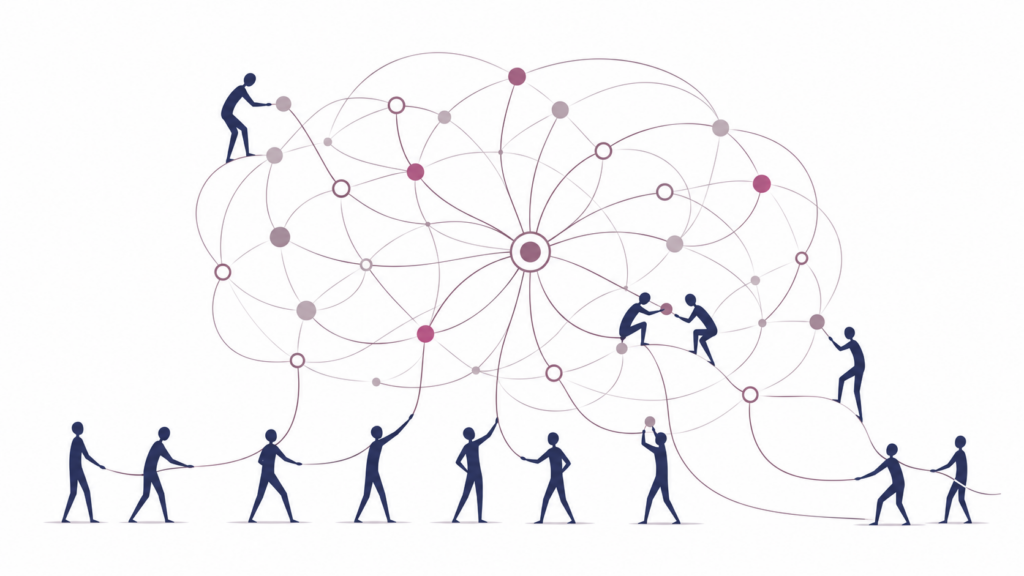
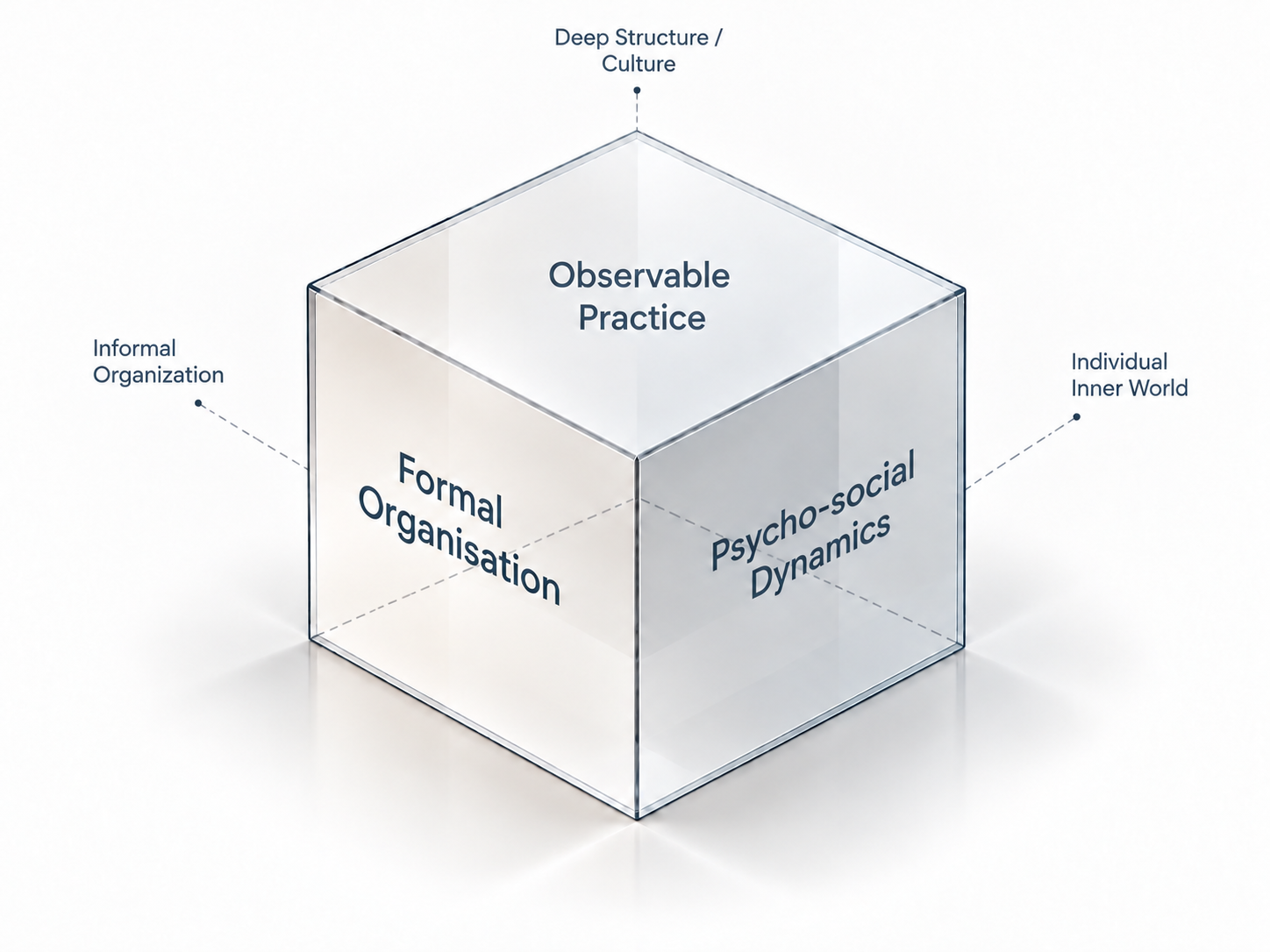
Organizations are complex systems. Sustainable change therefore requires an understanding of the underlying organizational logic and the ability to take it into account.
In our consulting work, we never consider change initiatives in isolation. Instead, we examine them in the context of key organizational factors – from structures and decision-making processes to leadership practices, roles, and informal dynamics.
We help higher education and research institutions sharpen their systems theory and organizational sociology , we focus on key interdependencies and uncover blind spots that significantly shape organizational change processes.
Effective organizational development builds on the knowledge, experience and diverse perspectives. of the people who work together within an organization. We regard this diversity as a vital resource for jointly developing tailored solutions that reflect the unique logic and specific needs of your organization.
At the same time, we factor the effects of psychosocial dynamics into the desing of our change processes. Change affects not only structures and processes, but also people, their relationships, expectations, and sense of identity.
Sustainable change therefore requires more than simply providing information: it calls for dialogue, trust, and opportunities for active participation and real opportunities for shaping the change process and having a tangible impact.
Our approach is participatory and resource-oriented.In this way, we strengthen acceptance, foster shared ownership and responsibility and support the development of a resilient, future-oriented organizational culture.
Change processes do not follow simple if-then rules. Exploring new paths therefore also means enabling collective learning, and adapting approaches when necessary. Successful organizational development thus requires a careful balance between consistent action and openness to new insights.
his combination of commitment and adaptability is a defining feature of our consulting approach. We provide clear direction throughout change processes while remaining attentive to their evolving dynamics. With constructive energy and the necessary persistence, we support the implementation of agreed measures, jointly evaluate their effectiveness, and adapt them when new developments call for adjustments.
The result is adaptive organisational developmentthat not only addresses current challenges but also remains effective in the face of evolving demands.
In a dynamic market environment, you need teams that face challenges proactively and developing innovative solutions when necessary. With the right agile practices, you can increase the self-organization capability and flexibility of your teams. At least as important as the right practices is, however, the attitude with which these practices are applied. We help you integrate agile principles into your corporate culture and thus strengthening the solution orientation and adaptability of your entire company.
There is hardly any area of cooperation that remains untouched by a company's leadership culture. Developing your company's leadership culture therefore means harnessing the power of a constructive leadership culture to unleash your company's full potential.
Trying to change a management culture by decree, however, is doomed to failure from the outset. So what viable alternative is there? How can you succeed in developing your company's leadership culture?
An attractive leadership mission statement is a good first step. Left to its own devices, however, a leadership mission statement quickly runs the risk of degenerating into mere lip service. Sustainable change begins when leaders start filling the mission statement with life. A decisive aspect of successful leadership culture development is therefore the synchronization of the leadership mission statement and leadership practices.
A strong start is important — but real impact comes from taking the next step. Every deep transformation inevitably creates a gap between intention and capability. Closing this gap effectively requires professional leadership enablement.
We see leadership development as an integral part of any successful leadership culture transformation. Through targeted development programs, practical learning formats and continuous guidance, we support your leaders in embedding new mindsets, capabilities and behaviors sustainably.
Equally essential are structured spaces for reflection, where goals, progress and individual development paths are reviewed regularly. This creates a learning-oriented, future-ready leadership culture that aligns with your organization’s values, strategic priorities and operational demands.
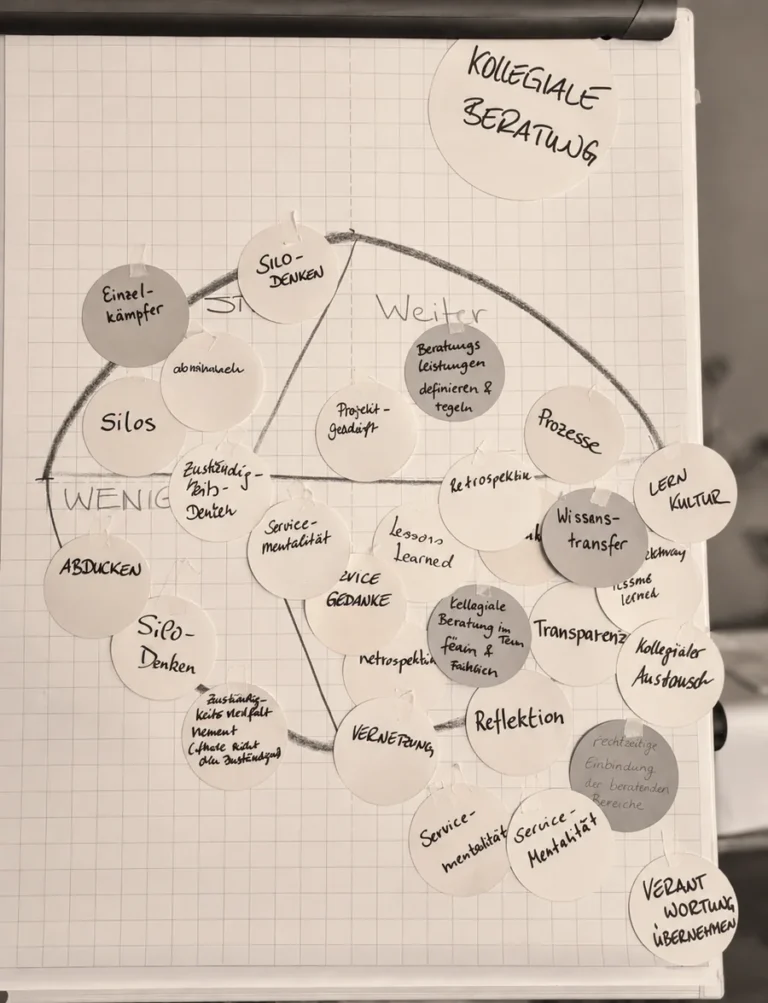
With the increasing complexity and volatility of today's market dynamics, companies can rely less and less on the performance of outstanding individuals. In order to remain competitive, the resources, expertise and cooperation of entire teams are required. Cooperative teamwork with a strong commitment to the overarching team goals, independent action and solution-oriented thinking - this is the goal and aspiration of most team leaders, and often of most team members too.
Teamwork, however, doesn’t always meet the desired and necessary standards. Never ending discussions with ambiguous results, unclear responsibilities, an ineffective workflow – stress factors that have high costs. Among the most typical costs are bottle necks, high mistake margins and frequent team conflicts.
Dysfunctional team patterns often stem from unclear roles, unspoken expectations, or entrenched communication structures. If these dynamics are not identified early, they can erode motivation, performance, and trust over the long term.
A crucial step in successful team development is therefore making dysfunctional patterns visible — both at the structural and interpersonal level. Viewing antipatterns through a systemic lens, we create transparency around the root causes of team challenges, establishing the foundation for targeted development initiatives that restore effectiveness, enable solution-oriented collaboration and strengthen the team’s overall performance.
With the right team development measures, you foster a respectful, collaborative and results-driven work environment— creating the foundation for your team to reach its full performance potential.
We design team development processes aligned to your team’s history, current dynamics and your specific development and business goals. Through systematic analysis and targeted interventions, we help your team build clarity, trust and highly effective collaboration.